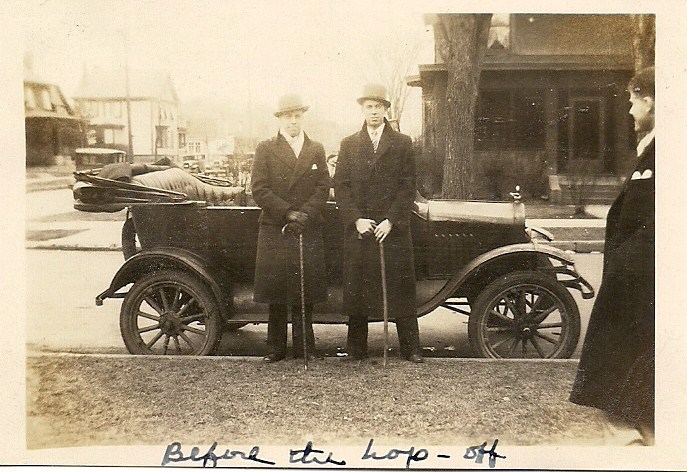
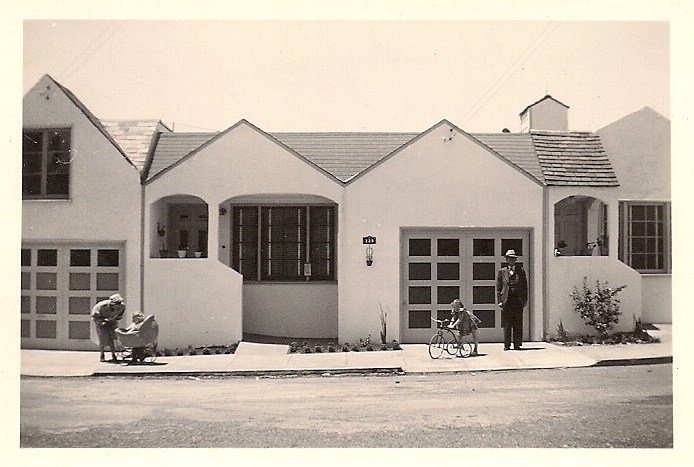
"...one supposed it lucky to be born"

So the other day was my birthday, and at my age you don't make too much of it--although I did get a smashing donut "cake." As I was reading the morning paper (before it became too covered in chocolate and sprinkles to make out), my eye fell on the "Today in History" column, and later on the list of the day's celebrity birthdays. It was reasonably interesting to discover that in 1609 Henry Hudson began exploring the river that was later to bear his name, and that Elizabeth Barrett and Robert Browning chose to elope on "my day" in 1846. I have no idea who Yuto Nagatomo is, but it was nice to see that H. L. Mencken, Maurice Chevalier, Alfred A. Knopf, and Jesse Owens are all among my Virgo buddies. Apparently 12 September is also the feast days for several saints, including Ailbe of Emly (patron saint of wolves) AKA Saint Elvis (!), and Guy of Anderlecht (who protects against rabies). Fascinating.


Putting aside these strangers, I wondered who in my family tree shared my birthday; out of over four thousand people (albeit many of whose birth dates are unknown), I figured there had to be a few.

Reviewing the report I generated, I noticed that there were other events tied to 12 September as well: two deaths, Lillian Amelia Johnson, mother-in-law of a maternal first cousin, twice removed (26 Oct 1886 - 12 Sep 1977); and Robert Elmer Velin, father-in-law of a maternal first cousin, once removed (3 May 1916 - 12 Sep 1979). My birthday is also the death date of John Alden (15 Sep 1598 - 12 Sep 1687) of history and legend, who may be a paternal eleventh great-grandfather, although I am still verifying this.


A fictional representation of a feasible ancestor.

There has also been one marriage, that of Moses Steele (10 Sep 1745 - 9 Feb 1814), a maternal first cousin seven times removed, to a Lydia Campbell--or Gibson, records vary--(19 Sep 1776 - 7 May 1836), on 12 September 1805, in New Hampshire, just months after the death of his first wife, Abigail Codd (15 Dec 1751 - 24 Jan 1805). Miss Campbell being Mr Steele's second wife may explain the nearly twenty year age difference....

But back to the birthdays. More distant relations include Elizabeth Mott (12 Sep 1672 - 22 Mar 1749), a paternal ninth great grand-aunt (and one of five women by that name in the family), and Claire Elaine Runser (12 Sep 1929 - 4 Oct 1946), a maternal second cousin, once removed.

My only direct ancestors who share my birthday are actually father and son: Benjamin Lowell (12 Sep 1642 - 22 Oct 1714) and Joseph Lowell (12 Sep 1680 - 8 Apr 1753), paternal eighth and seventh great grandfather, respectively. In an odd coincidence, Benjamin died on the same date as my sister's birthday.

Benjamin Lowell was born in Newbury, Massachusetts, the son and grandson of two of the town founders: Percival Lowell (1571- 8 Jan 1664), who emigrated from England with his family, including son John Lowell (1595 - 10 Jul 1647), Benjamin's father. The family connections with Newbury run deep. Benjamin Lowell married Ruth Woodman (28 Mar 1646 - 22 Oct 1714), daughter of another town founder, Edward Woodman (27 Dec 1606 - 11 May 1670). There are excellent articles about John Lowell and Edward Woodman at the Newbury, Essex County, MA GenWeb site.

http://newbury.essexcountyma.net/lowell.htm
http://newbury.essexcountyma.net/woodman.htm


A vintage postcard of the Founder's Memorial, and a detail of one of the sides.


Somehow this post seems to have taken us quite a ways from my birthday, which when you get to be my age, might be just as well. Time for another donut.

1. Benjamin Lowell (12 Sep 1642 - 22 Oct 1714) was born in Newbury, Essex, Massachusetts, where he married Ruth Woodman (28 Mar 1646 - 22 Oct 1714) on 17 Oct 1666.

2. Joseph Lowell (12 Sep 1680 - 8 Apr 1753) was also born, and died, in Newbury. It was also there that he married Mary Hardy (2 Feb 1693 - 4 Nov 1747), daughter of George Hardy (1660 - 6 Nov 1694) and Mary Fogg (1 May 1662 - 6 Nov 1694), on 6 Dec 1707.

3. Joseph Lowell (20 Feb 1720 - aft 1769) married Mary Jones (5 Feb 1726 - ?), daughter of Joseph Jones (1 Oct 1702 - ?) and Mary Prowse (26 Nov 1703 - 1783), on 11 Jan 1745, in Newbury, Essex, Massachusetts.

4. Hannah Lowell (23 Jan 1759 - Sep 1802) married Reuben Grindle (20 Mar 1757 - 15 Jul 1835), son of John Grindle (1 Aug 1714 - 1794) and Elizabeth Dorr (1727 - 12 Apr 1761), on 6 Oct 1777, in Penobscot, Hancock, Maine.

5. Deborah Grindle (25 Feb 1784 - aft 1860), married Isaac Burnett (1780 - May 1860), parents unknown, on 23 Dec 1802, in Hancock County, Maine.

6. Nathaniel S Burnett (12 Mar 1826 - 10 Oct 1885) married Rachel Elizabeth Squire (28 Jan 1829 - 21 Apr 1902), daughter of Samuel Squire (13 Apr 1797 - 26 Jul 1871) and Lovina Coleman (27 Oct 1806 - 2 Jul 1901), on 26 Dec 1850, in Hancock County, Maine.

7. Charles A Burnett (Feb 1856 - 17 Jan 1930) married Ella Swarts (1 Sep 1861 - Apr 1899), daughter of Charles Swarts (12 Feb 1835 - 8 Jan 1909) and Henrietta Davenport (Jan 1836 - May 1904), on 1 Sep 1879 (her eighteenth birthday), at Spring Lake, Minnesota.

8. Alfred Nathaniel Burnett (19 Aug 1883 - 31 Jul 1959) married Jennie Arleta Eaton (14 Mar 1891 - 15 Apr 1979), daughter of Dor Henry Eaton (May 1869 - 31 Dec 1945) and Anna B Miller (Jan 1867 - aft 1920), in 1909 in Minnesota.

9. Leroy Stanley Burnett (31 Aug 1910 - 11 May 1980) married Hazel Lucille Erickson (6 Sep 1910 - 6 May 2002), daughter of Erick Albert Erickson (28 Aug 1864 - 27 Nov 1948) and Johanna Maria "Marie" Svard (5 Feb 1875 - 28 Apr 1914),on 21 Jun 1933 in Minneapolis, Minnesota.

10. [Living] Burnett married Beverly Alane Brown (8 Aug 1934 - 7 Mar 2010), daughter of Dana Earl Brown (26 Jan 1910 - 10 Sep 1984) and Myrna Margaret Severin (6 Nov 1907 - 12 Jun 1997), on 4 Mar 1961 in Long Beach, California.

11. Your humble blogger.

"...shuffle and break-down."

In my last post, I wrote about the unavoidable nuisance of brick walls in genealogy, and how two of my highest walls block my two closest surnames: Brown and Burnett. Previously, I focused on the former; this time, I will tackle the latter. Part of my enjoyment of family research (and this blog) has come from meeting others, collaborating and sharing information or theories. One of my third-great grandfathers, Nathaniel S Burnett (12 Mar 1826 - 10 Oct 1885), son of today's subject, had at least eight children of his own, and at least thirty-six grandchildren; he was one of ten himself. With those odds, perhaps someone will discover this virtual message in a bottle and come to my aid!

Isaac Burnett (1780 - May 1860), one of my paternal fourth great-grandfathers, is my oldest verifiable Burnett ancestor. Beyond that, things get confused. Many researchers show him as the son of Daniel Burnett and a woman named Mariah, or Maria, with her last name often given as Burnham. This may be traced to two perhaps unrelated (no pun intended) facts.

First, in the venerable New England Historic Genealogical Society's publication, Massachusetts Town Birth Records 1620 -1850, there is a record from the town of Ashfield of an Isaac born to Daniel Burnett and Mariah.

Second, the 1850 U S Federal Census gives Massachusetts as Isaac Burnett's birthplace.

Voila! Isaac's parents are Daniel and Maria(h) Burnett. But as a wise National Park Ranger told me on a genealogically-inspired trip a few years back: it takes three legs to make a stool. One bit of information is interesting, two makes it more likely, but three confirms it as a fact.

And in this case, not only are we missing that crucial third leg, but there is this damning piece of evidence, which others seem to excuse or ignore:  Daniel Burnett's birth is well-documented as being in 1776, just four years before his supposed son's in 1780. Anyway....

We do know that Isaac was born in Massachusetts in 1780, and moved to Maine by at least 23 December 1802, when he married Deborah Grindle (25 Feb 1784 - aft 1860), daughter of a long-established and prolific New England family, whose name is also found as Grindal, Grindall, and Grindell.

The Burnetts are next found in the 1810 U S Federal Census living in Sedgwick, Hancock County, Maine, with their first four children, all girls: Peggy (17 May 1804 - ?), Lydia (8 Nov 1806 - ?), Sarah (20 Oct 1808 - ?), and another, possibly named Abigail.

In 1814, the family moved about fifty miles to the northwest, to the just-incorporated town of Newport, Maine; they are considered among the town founders. At one of the earliest town meetings, on 3 April 1815, Isaac Burnett is named as an agent of the newly-formed school district.


Newport, Hancock, Maine about 1875.


By 1820, there are two more daughters and--at last--a son (as of now all nameless, alas), then another: Reuben Burnett (abt 1818 - aft 1880), named after Deborah's father. On 12 March 1826, the last child--and at last my direct ancestor--Nathaniel S Burnett was born.

Isaac Burnett was primarily a farmer; an 1850 census reports he had seventy improved acres and thirty unimproved acres. He possessed one horse, two milk cows, two oxen, four other cattle, eleven sheep, and one swine, and was producing wheat, oats, rye, wool, butter, and cheese. 


Isaac Burnett is found on Line 10, after three lines of those prolific Grindalls.
 On Line 12 can be found Samuel Squire, whose daughter Rachel will marry Isaac's son Nathaniel four months after this Census was taken. [Detail]


By the time of Isaac's sudden death (of "old age", which is nice to read after a page otherwise full of dropsy, consumption, and typhoid fever) at age eighty in May 1860, he had also been working for some time as a blacksmith, perhaps a reflection of Newport's growing prominence as a carriage-making town.

It is remarkable how much we can learn about this ordinary man who died over one hundred and fifty years ago.

But who are Isaac Burnett's parents?
 
1. Isaac Burnett (1780 - May 1860) was born in Massachusetts, and married Deborah Grindle (25 Feb 1784 - aft 1860), daughter of Reuben Grindle (20 Mar 1757 - 15 Jul 1835) and Hannah Lowell (23 Jan 1759 - Sep 1802), on 23 Dec 1802 in Hancock County, Maine.
2. Nathaniel S Burnett (12 Mar 1826 - 10 Oct 1885) married Rachel Elizabeth Squire (28 Jan 1829 - 21 Apr 1902), daughter of Samuel Squire (13 Apr 1797 - 26 Jul 1871) and Lovina Coleman (27 Oct 1806 - 2 Jul 1901), on 26 Dec 1850, in Hancock County, Maine.
3. Charles A Burnett (Feb 1856 - 17 Jan 1930) married Ella Swarts (1 Sep 1861 - Apr 1899), daughter of Charles Swarts (12 Feb 1835 - 8 Jan 1909) and Henrietta Davenport (Jan 1836 - May 1904), on 1 Sep 1879 (her eighteenth birthday!), at Spring Lake, Minnesota.
4. Alfred Nathaniel Burnett (19 Aug 1883 - 31 Jul 1959) married Jennie Arleta Eaton (14 Mar 1891- 15 Apr 1979), daughter of Dor Henry Eaton (May 1869 - 31 Dec 1945) and Anna B A Miller (Jan 1867 - aft 1920), in 1909 in Minnesota.
5. Leroy Stanley Burnett (31 Aug 1910 - 11 May 1980) married Hazel Lucille Erickson (6 Sep 1910 - 6 May 2002), daughter of Erick Albert Erickson (28 Aug 1864 - 27 Nov 1948) and Johanna Maria "Marie" Svard (5 Feb 1875 - 28 Apr 1914), on 21 Jun 1933 in Minneapolis, Minnesota.
6. [Living] Burnett married Beverly Alane Brown (8 Aug 1934 - 7 Mar 2010), daughter of Dana Earl Brown (26 Jan 1910 - 10 Sep 1984) and Myrna Margaret Severin (6 Nov 1907 - 12 Jun 1997), on 4 Mar 1961 in Long Beach, California.
7. Your humble blogger.

"no longer take things at second or third hand..."

I have--as all genealogists must--a few brick walls that I just can't seem to bring down. Annoyingly enough, two of them concern my closest surnames: Burnett and Brown. And both of these walls are rife with confusions. So it was a delight when I recently discovered an obituary for a maternal second great-grandfather, Silas W Brown. Finally, there would be some answers--or at least, clarifications!

It appeared in the Carrollton [Missouri] Daily Democrat, 20 November 1893, under the--what is the opposite of "charming?"--heading "Death's Doings." Let me provide a complete, annotated transcription:

"S. W. Brown, aged 65 years [incorrect], died at his home in Carrollton at 4 a. m. this morning. Deceased has lived in Carrollton for 18 years [incorrect] and his many friends will mourn his loss. He leaves a wife and five children [incorrect]. Three sons, Marion, Lee and Clarence reside in Kansas City, one daughter, married, lives in Marceline, and one in Carrollton, the wife of Jas. Williford [incorrect]. Funeral to-morrow at 2:30 p.m. at residence under the auspices of the Masonic Lodge."

Five sentences, at least four errors (I would like to believe that he did in fact have many friends). Clearly, this was not the treasure trove of information for which I was hoping. Let me explain the errors.

"aged 65 years"   Silas W Brown was born about 1835, based on the information given in the Federal Censuses of 1850, 1870, and 1880, as well as his Civil War records, making him about 58 at the time of his death. He had been suffering from heart disease for a number of years, and had been receiving a Civil War pension as an invalid since 1889.


"lived in Carrollton for 18 years"   That would put Silas and family in Carrollton from about 1875 onward. Perhaps, but not consecutively. The 1870 Census shows the Brown family living in Chillicothe, in neighboring Livingston County, so it is possible that by 1875 they had moved to Carrollton. But by 1880, the family had uprooted and was living in Buena Vista (pronounced "byoona vista" at the insistence of Mrs Alsina Dearheimer, who named the newly-formed town), Colorado. Apparently Silas decided to give up his life as a clerk in a store for the life of a prospector(!), which is listed as his occupation on said Census; this is certainly consistent with the peripatetic approach to careers the Brown men seem to have. The Browns lived in Colorado at least long enough for one of their children to be born there (daughter Lula Ethel Brown, 7 Dec 1880 - 2 May 1944), before returning to (apparently) Carrollton.

"leaves a wife and five children"   Silas did leave his wife, the former Malinda J Carter (30 Jan 1849 - 8 Jan 1924), but in 1893, at least eight of the couple's eleven children were still living. Besides the aforementioned sons Marion, Lee, and Clarence, and the two married daughters (about whom more briefly), there were daughters Lula Ethel, Leona (Apr 1888 - aft 1905), and Nina Fay (Sep 1890 -bef 1940). There is the possibility that the other three children also survive Silas in 1893, but by the 1900 Census, we know that at least three of Malinda's children are dead, with two more following by 1910.

"the wife of Jas. Williford"   Silas' daughter Bertha E Brown (21 May 1870 - 15 Aug 1952) married James Henry Willerford (May 1860 - 1907) on 7 June 1884. And for those of you not paying attention, that would be just two weeks after her fourteenth birthday; but not to worry: on the marriage license, the verbal consent of her father was given.... A few years--and five children--later, Bertha and James moved to Los Angeles, California, then split up. In 1905 she remarried, this time to the remarkably named Cephas Hurburt Miller Shibley (prob 28 Mar 1855 - Dec 1934); she was his second, or possibly third wife. He was quite a character, and deserves a blog entry of his own, but I digress.... In 1915, she next married Henry Bricks (1 May 1878 - 30 May 1952), whom she outlived by just a few months.

The daughter living in Marceline is presumably Alice M Brown (Aug 1867 - aft 1956?), who at the time of her father's death was married to William M Rogers (bef 1863 -abt 1897); on 8 January 1912 she married Albert O Wilson (1867 - 28 May 1956).

Other questions and confusions still remain. Who are the other two unnamed Brown children? Was Nina Fay Brown ever married to a man named Albert Wires (and was his last name Wire, Wires, or Wyres; there are documents with all these spellings)? Many people seem to think so, citing as evidence an application for marriage issued to Nina and Albert (although Nina had not signed it) on 29 Dec 1909. Whether they intended to marry but did not, or even if this is the same Nina Brown (which I doubt--there are other factual discrepancies) remains to be discovered. At any rate, our Nina Fay Brown did get married in 1909, but to Melvin I Martin (17 Jan 1881- 11 Jan 1967); while Albert shows as "Single" on the 1910 Federal Census, but married Edna N Silvers about 1915.


The dubious document.


So that seems settled. But... each answer seems to add another question! Melvin I Martin was born in Oregon and lived in Southern California his entire life. In 1900, he was working as an assistant school janitor, by 1910, he is a stone cutter. How did he cross paths (let alone marry) a farmer's daughter born and raised in Missouri? My guess is that Nina went to Los Angeles to visit her sister Bertha.

Brick walls.

My ongoing thanks to Diana Gale Matthiesen (and her useful website Diana, Goddess of the Hunt — for Ancestors!  at http://dgmweb.net/GenealogyHome.html), my guide to all things Brown. I hope at least some of this information will be new to her!

1. Silas W Brown was born in New York State in about 1835, to Willard Brown (abt 1806 - aft 1860) and Mary "Polly" Rasey (21 Oct 1808 - 12 Dec 1868), sixth of their thirteen children. The family lived briefly in Henrietta Township, Ohio, then moved to Castleton, Michigan by 1850. On 7 Aug 1861, Silas enlisted in the Union Army, serving with Michigan's Company D, 6th Infantry Regiment as a private, beginning 20 August. He was mustered out of the same regiment on 23 Aug 1864. On 22 Oct 1865 he married Malinda J Carter (30 Jan 1849 - 8 Jan 1924), daughter of William Carter (1800 - 1849) and Melinda Johnson (1813 - 1902). The Browns had eleven children, living primarily in central Missouri, with a brief stay in Colorado circa 1880, where Silas attempted prospecting, despite his military records indicating he had incurred "heart damage" during his service. By 1890, he was an invalid, and died  on 20 Nov 1893. He was buried in Oak Hill Cemetery, Carrollton, Missouri, and was provided with a Veteran's headstone by the U S Government.

2. Clarence Edgar Brown (1 Dec 1878 - 21 Aug 1937), married Cora Mabel Kinman (4 Sep 1876 - 22 Aug 1958), daughter of William Edwin Kinman and Sarah Jane Conley, on 16 Sep 1903, in Morgan, Minnesota.

3. Dana Earl Brown (26 Jan 1910 - 10 Sep 1984) married Myrna Margaret Severin (6 Nov 1907 - 12 Jun 1997), daughter of John Jacob "Jack" Severin and Isabelle "Belle" Runser, on 21 Oct 1933, in Minneapolis, Minnesota.

4.  Beverly Alane Brown (8 Aug 1934 - 7 Mar 2010) married [Living] Burnett, son of Leroy Stanley Burnett and Hazel Lucille Erickson, on 4 Mar 1961, in Long Beach, California.

5. Your humble blogger.


..."the men ever born are also my brothers, and the women my sisters..."

Still feeling the Spirit of '76 from a previous post, this time I'm going to focus on another maternal fifth great-grandfather and Revolutionary War ancestor, Jesse Toliver (1756 - 4 Mar 1838), although his career is not quite as stellar as Capt Samuel Cherry's.

Jesse Toliver began his career as a volunteer Private, under (then) Capt William Lenoir, going after the Cherokee Indians in the North Carolina region who were allied with the British. In his own words, "we burnt and destroyed the Indian towns & huts that we found … had no fighting as the Indians fled when we came into the nation." What a pity.

Once the war against the British began in earnest, Jesse Toliver, under now-General Lenoir, marched to Catawba, North Carolina, where, according to his Revolutionary War pension request, "[W]e saw the dead lying on the field the torys was defeated and we were marched home after being out in service two months." On the next campaign, "We pursued the Torys as they retreated until they joined the British Army near Kings Mountain under one [Major Patrick] Ferguson. The time that I served in this trip was one month and a half. We were then marched back home."

Jesse's third tour of duty was at the Battle of King's Mountain, North Carolina. Once again, he missed the fighting. "[W]e marched from Wilkes County up the Yadkin River to Johns River … all that had horses went on & left the foot men … The Battle was fought before the foot men arrived as I was one of them." They met the army coming back from the battle, and Jesse accompanied the prisoners to Salem as a guard. There he "stayed until my three months was out and then returned home." While at Kings Mountain Nat'l Military Park last summer, I saw a list of the names of the participants of the battle. Jesse's name (along with that of his brother, Moses) was mentioned in a footnote indicating names of those who arrived the day after the historic battle of 7 October 1780.


Smiling, before I learned my ancestor was a day late for the battle.

During his final tour of duty, Private Toliver marched with Lenoir's company to the Haw River in Orange County, North Carolina, where they spied on British General Charles Cornwallis' army, then after five months "we marched home." At the very end of the war, Jesse finally saw some action "pursuing small portions of Torys." Apparently, he also collected livestock from draft-dodgers.

Jesse Toliver's war record, while not terribly illustrious, is not the most interesting thing about him, at least according to me. (Although, in April 1834, he was able to secure an annual veteran's pension of fifty-five dollars for his military service, a nice stipend for time spent primarily in marching.) What is interesting--again, and perhaps, uniquely to me--is that I am also descended from his sister Lucy Toliver (23 May 1768 - 1832), making me that most unusual thing, a Double Toliver. Which brought me (and brings me) to the 9th Annual Toliver Family Reunion, held in the hills of Morehead Kentucky in 2011. 

Here's a little story that should make you sigh
About two ancestral folk:
Let us call them Lucy "X" and Jesse "Y,"
Though their last name is no joke.

About two years ago, when I was just beginning to delve seriously into  genealogy, I found (in notes from my Grandmother Brown that she had sent me over thirty-five years earlier) that I had an ancestor named Rebecca Tolliver, who married David Conway, or possibly Conley, believed to be from Ireland. Though well-intentioned, Grandma's information was mostly inaccurate. Using Ancestry.com, I found Rebecca Tolliver and her husband, a Conley from Indiana, not the Emerald Isle (although, to be fair, his Conley great-grandparents had emigrated from Ireland, probably of Scottish or English descent). And although I was able to discover more about Rebecca Tolliver's ancestors, I was stuck on David Conway/ley. Using Google, I discovered the Tolliver Family website, which had some useful information, and contacted the undisputed doyenne of all things Tolliver, Emma Lee T, who, with her husband (ironically, the actual Tolliver descendant), live just a few hours from me. She gave me some useful hints, and from her I was able to learn that David's father had the alliterative, unlikely, and--I believed--unusual name of Constantine Conley. So that was settled.

Until, Ancestry-ing away until nearly dawn, becoming more and more baffled but determined, I discovered that there were two, contemporaneous Constantine Conleys, both circling each other geographically, but only one being a forebear of mine. Of course, this was further complicated by the fact that--having already firmly established Conley and not -way, mind you--the last name was spelled alternately as Conley, Connelly, Conelly, Connely, and, occasionally, [illegible]. And my Constantine Conley married one of the daughters of Lucy Toliver, Jesse's sister.

Over that brick wall, I further learned from Emma Lee that there was a Tolliver family cemetery in Allegheny County, North Carolina, and since S and I were already planning a Road Trip to South Carolina to see a living (!) relative of his, this seemed the perfect opportunity. The cemetery was really just a family plot on private property, on the Virginia/North Carolina border; Emma Lee recommended we call ahead, which we tried, to no avail. Nonetheless, we persevered, wending our way through tiny mountain roads, and after passing it twice, we finally found the turn off. Once there, we declined to drive across the rickety-looking wooden bridge over a deep ravine, and cautiously walked across.


On the other side, we looked about briefly, but were not able to find the cemetery. An ominous-looking dog on a neighboring property hastened our search. That and the fact that we were clearly trespassing in a region where I'm sure gun ownership was a non-issue. Subsequently I found out that although the site has been restored and cleaned up in the last few years by fellow Tolliver descendants, there are still many unknown graves, and that it was unlikely my direct ancestors were buried there.

A few months later I received an email from Emma Lee letting me know about an upcoming Tolliver family reunion, to be held just a couple hours south of us. Why not! The reunion was a well-attended annual affair, over a long weekend, and included--beyond the meeting of distant relatives--lectures, a driving tour of local sites of family relevance, silent auction, and talent show. Not having an abundance of stories or photos to share, I felt that at the very least, I could come up with something for the talent show: perhaps a sophisticated little cabaret number to Stephen Sondheim's "The Story of Lucy and Jessie" (how conveniently apt, no?), from Follies, with new lyrics of my own devising. Words in hand, I was unable to find a karaoke recording of the tune, nor sheet music, although admittedly, I did not look that hard, although one could hardly consider stage fright to be the cause. Why push myself forward, I said to myself; be an observer. Consider this trip a case of cultural anthropology.

Now Lucy had fertility
Along with the ability:
To raise fourteen young kiddies was her fate…
Jesse and his brother Mose
Put on their redcoat-fighting clothes,
But somehow always got there a day late!

My creative impulses dammed (dimmed? damned?) in that direction, I decided to at least make myself a t-shirt with my Double Toliverhood family tree emblazoned on it. If nothing else, it might be a nice ice-breaker. We also took some bags of home-made dog treats for the silent auction.

Arriving at the hotel, nestled in the Kentucky hills, we were almost instantly greeted by the gracious Emma Lee ("everyone in the south has two names") herself, who began tracing my lineage down the front of my shirt with her forefinger, from nipple to--nearly--navel, her daughter calling her off just in  time: "Mom, there is someone in that shirt!" After getting settled in our room, it was off across the parking lot to the Ponderosa Steakhouse, where it was soon apparent why the all-you-can-eat buffet was the clear favorite. We sat with two of Emma Lee's daughters, who were extremely witty, and had just the right amount of perspective to find the whole thing fun.

Next we headed to the Carl Perkins Community Center (named after a former member of the House of Representatives, not the rockabilly genius one might suspect being honored in this neck of the woods), as Emma Lee was taking the stage to make introductions ("Where is Robert? Robert, would you please stand up and show everyone your marvellous shirt?" So much for the anonymous observer....) and outline the weekend's events. Then followed the Talent Show.

Two Tolliver tots tunelessly sang "Jesus Loves Me," a Tolliver teen with an electric guitar fumbled through "Jailhouse Rock" (perhaps he had not gotten the word on which Perkins was sheltering us...), and an elderly toothless Tolliver ended his set with an encore, putting aside his guitar to sing an "acapulco" version of his most-requested hymn. One can only imagine what kind of reaction my snappy showtune would have provoked.

Afterward, we perused the Silent Auction tables (crocheted dish towels, religious plaques, Avon products, and two bags of peaches) before a guest speaker (who would be leaving us shortly, as his Masonic Lodge was having an election this same weekend) gave a brief talk about the (in)famous Rowan County War, also known as the Tolliver-Martin (or Martin-Tolliver, depending on which side you favor) Feud, the bloodiest in Kentucky history, with at least 22 confirmed casualties. Thus ended the first day.

Tol-i-ver
(With two "Ls" if you prefer)
But never Taliaferro, "T" then "A,"
We know that's wrong, due to the DNA.

An odd combination of walkers and laptops, the Tolliver matriarchs (for they mostly seem to be eager elderly women dragging along grudging husbands) may be half-deaf, but they are completely fluent in terms like "mitochondrial" and "haplogroups," and can parse the difference between a sixth cousin and a mere fifth cousin once removed faster than most of us can remember our own birthday. We met up with them back at the Perkins Center the next afternoon, after spending the morning on a driving/walking tour of many of the Tolliver sites around the area.


Note the Double Toliver t-shirt.

(A perhaps coincidental side note: my mother's first, short-lived marriage was to a Martin. Did the feud perhaps live on?)

Everyone having gotten settled in, Emma Lee once again took the stage for greetings ("Is Robert here? Did everyone have a chance to see his wonderful shirt? Robert, stand up for a minute"), announcements (apparently, a sixth Tolliver brother was recently discovered), and to break us up into smaller groups, based on which Tolliver we were descended from. Interestingly, I was the only one present representing either Lucy (despite the fourteen children) or Jesse (who merely fathered ten), so I got to sit with the children of Moses. So to speak. A continuing point of discussion in every group was just from whom all these Tolliver clans were descended; like Capt Samuel Cherry, the identity of the Tolliver's parents were another long-time brick wall that has defeated many researchers.

If Lucy and Jesse would just name their dad,
I could show you some folk who would finally feel real gla-ad!

No new evidence being found, the silent auction results tallied (our dog treats did well), and the day drawing to a close, it was time for the reunion--for this year, at least--to come to an end. All in all, I couldn't have enjoyed myself more.

1. Jesse Toliver married Frances "Frankie"                1. Lucy Toliver (23 May 1768 - 1832) mar-
Stamper (14 Feb 1767 - 6 Jan 1854), daughter           ried William Maxwell (1765 -1832), son
of Jonathan Brooks Stamper and Rachel                     of John Maxwell and Eleanor Marcus, in
Parks, on 8 October 1782, in Wilkes County,             1786, in North Carolina.
North Carolina.  

2. Jacob Tolliver (26 Jul 1799 - bef Oct 1854)            2. Elizabeth "Betsy" Maxwell (1801 - 25 Sep
married Susannah Isom (abt 1804 - aft 1860),           1850) married Constantine Connelly (4 Sep
daughter of John Isom and Rebecca Cole, on             1800 - abt 1844), son of John Conley and
27 Dec 1821 in Grayson County, Virginia.                  Catherine Miller, on 12 Jul 1823, in Lawrence
                                                                              County, Indiana.

3. Rebecca Toliver (abt 1823 - 1869)   married       3. David Conley (abt 1822 - aft 1880) on 5 Mar 1846, in Clay County, Illinois. Sharing the same great-grandparents (the unknown parents of Lucy and Jesse), they are second cousins.

4. Sarah Jane Conley (Nov 1857 - 13 Mar 1936) married William Edwin Kinman (Mar 1858 - 13 Jun 1925), son of William Kinman and Sarah R Moore, on 13 Nov 1875, in Redwood County, Minnesota.

5. Cora Mabel Kinman (4 Sep 1876 - 22 Aug 1958) married Clarence Edgar Brown (1 Dec 1878 - 21 Aug 1937), son of Silas W Brown and Malinda J Carter, on 16 Sep 1903.

6. Dana Earl Brown (26 Jan 1910 - 10 Sep 1984) married Myrna Margaret Severin (6 Nov 1907 - 12 Jun 1997), daughter of John Jacob "Jack" Severin and Isabelle "Belle" Runser, on 21 Oct 1933, in Minneapolis, Minnesota.

7 Beverly Alane Brown (8 Aug 1934 - 7 Mar 2010) married [Living] Burnett, son of Leroy Stanley Burnett and Hazel Lucille Erickson, on 4 Mar 1961, in Long Beach, California.

8. Your humble blogger.

"making a fetich of the first rock"

It has been too long since my last post, also timed to a national holiday. Since then, there have been family visits (always nice to spend time with living relatives), a vacation, and a career change. There are two longer posts nearly ready for publication, but I wanted to get this up, brief as it is, reminded by a newly found (albeit distant) cousin--thanks, Heather!

Through Ella Swarts (1862 -1899), a paternal 2x great grandmother, I am descended from four Mayflower families. Her maternal great-great grandparents, Amaziah Doty (1756 – 1833) and his wife Bethiah Hamlin (1758 – 1830) provide the links.
Amaziah’s father was Ebenezer Doty, and through his paternal line we can claim three of those Mayflower folks: Edward Doty, a paternal great-great grandfather; Francis Cooke, father of another paternal great-great grandfather (Jacob Cooke); and Stephen Hopkins, father of a paternal great-great grandmother (Damaris Hopkins, wife of Jacob Cooke).

Edward Doty (? – 1655, one of my 11x great grandfathers)  was one of two indentured servants to Stephen Hopkins, below. Once at Plymouth, he was known as a trouble –maker, involved in numerous disputes and lawsuits in the new colony, which he usually lost. He probably took great joy in the fact that his son married the granddaughter of his former master.

Francis Cooke (1583 – 1663, a 12X great grandfather) was an actual Pilgrim Separatist. His wife’s sister married Jan Lano, whose son Philippe De Lannoy was the progenitor of the Delano family in the U.S. Besides us, other descendants of Stephen Hopkins include Grandma Moses, Orson Welles, and Brian Wilson of the Beach Boys.

Stephen Hopkins (about 1582 – 1644, also a 12x great grandfather) was not a Pilgrim, but was hired by them to assist in governing the new colony; as such, he was one of the signers of the “Mayflower Compact.” Hopkins was shipwrecked off Bermuda in an earlier expedition, and spent time with the Jamestown colony prior to his boarding the Mayflower. It is believed that his shipwreck experience was the inspiration for Shakespeare’s Tempest. The Hopkins are considered one of the First Families of Virginia.
Amaziah Doty’s wife, Bethiah Hamlin connects us to the last of our Mayflower quartet: John Howland (? - 1672, a 10x great grandfather). Howland was another indentured servant (to John Carver, the first governor of the Plymouth Colony), but became a freeman after Carver’s death. The Howlands had ten children, and founded one of the three most prolific Mayflower progenies. Alongside us, their other descendants include Franklin D Roosevelt, George Bush, Sarah Palin, Ralph Waldo Emerson, Henry Wadsworth Longfellow, Brigham Young, and Humphrey Bogart. Others we may count as more distant cousins are Winston Churchill, Richard Nixon, and Gerald Ford, all of whom are descendants of John Howland’s brother Arnold.

Happy Thanksgiving!


Edward Doty and Faith Clarke
John Doty and Elizabeth Cooke
John Doty and Mehitable Nelson
John Doty and Lydia Dunham
Ebeneezer Doty and Mercy Whiton
Amaziah Doty and Bethiah Hamlin
Stephen S Doty and Polly Holmes
Alma Holmes Doty and Stephen Addison Davenport
Henrietta Davenport and Charles Swarts
Ella Swarts and Charles A Burnett
Alfred Nathaniel Burnett and Jennie Arleta Eaton (great grandparents)

Francis Cooke and Hester Mathieu
Jacob Cooke and Damaris Hopkins
Elizabeth Cooke and John Doty... (see above)

also

Francis Cooke and Hester Mahieu
Jacob Cooke and Damaris Hopkins
Mary Cooke and John Rickard
Johanna Rickard and Elisha Whiton
Mercy Whiton and Ebeneezer Doty... (see above)

Stephen Hopkins and Elizabeth Fisher
Damaris Hopkins and Jacob Cooke... (see above)

John Howland and Elizabeth Tilley
Joseph Howland and Elizabeth Southworth
Mercy Howland and Joseph Hamlin'
Southworth Hamlin and Tabitha Atkins
Bethiah Hamlin and Amaziah Doty... (see above)

"the fourth of Seven-month, (what salutes of cannon and small arms!)"

This week beginning with Independence Day, it seemed apt to feature one of my ancestors, a maternal fifth great-grandfather, who fought in the Revolutionary War: Capt Samuel Cherry (15 May 1756 - 27 Oct 1825).


TO THE MEMORY OF CAPT SAMUEL CHERRY
(by his friend Benjamin Coe)

The hero is gone, and deeply lamented
The hero who fought by the side of the brave,
The hero who served in the fields that were tented,
For victory, or an honorable grave.
The hero is gone, but his mem’ry for ages
Will live in the land where freedom is revered.
While history stands recorded in pages,
While the rights of his country are ever revered.
The hero is gone, never returning,
Few are not left to tell us his story.
Tears of the warriors in bitterness burning
Will fall on the vet’ran companion in glory.
The hero is gone, his seasons of glory,
His springs, his summers and autumns are ended.
In the winter of age, with a heart that was heavy
He left us with freedom and liberty blended.

 
Benjamin Coe, author of this poem, famously avoided duty in the Revolutionary War by sending one of his slaves, Cudjo, in his place. Cudjo, who said he descended from African royalty--perhaps an early example of genealogical wishful thinking--received high honors, as one of many slaves who served in the war. Benjamin Coe's brother, Moses Coe, is a direct ancestor of former President George W. Bush. Anyway....

Samuel Cherry was born in Londonderry; this much we know--but which Londonderry? Opinion is divided between those who believe he was born in Londonderry, Ireland, and those who believe he was born in Londonderry, New Hampshire. His birthplace, as well as who his parents were, are apparently lost to history, despite several generations of researchers trying to find out. Perhaps we will never know.

We do know that he was in what was to become the United States by age eighteen, for on 23 April 1775, he enlisted in (then) Capt George Reid's Company (1st New Hampshire Regiment) after the Lexington Alarm. Samuel Cherry fought at Bunker Hill, and participated in the assault on Quebec, Canada.

On 8 November 1776, he was commissioned Lieutenant in Capt James Carr's regiment, 2nd New Hampshire company, under the command of Col Nathan Hale.

In 1777, Samuel Cherry played a prominent role in the Battle of Bemis' Heights, and the Battle of Freeman's Farm (both Saratoga). On 2 December of that year, he was commissioned Captain Lieutenant, 2nd New Hampshire Regiment, under (now) Col Reid.  Also that year, he found time to marry Ann Wallace (23 Feb 1754 - 24 Jun 1812), of Londonderry, New Hampshire. (Although some sources call her Frances Isobelle Wallace, I have never seen documentation for this.)

Nuptials over, in 1778 Samuel Cherry participated in the Battle of Monmouth. Through 1779, he was a member of General George Sullivan's Indian Expedition through Pennsylvania and western New York. (General Sullivan would later become the father-in-law of Samuel Cherry's wife's cousin.) On 10 October 1779, Samuel Cherry became the father of the first of his eleven children, Samuel Cherry Jr (who later married a Delano), and a few weeks later, on 30 November 1779, he was commissioned Captain in the 2nd New Hampshire.


A re-enactment group as "Capt Cherry's Outfit."


Capt Cherry was present at Cornwallis' surrender at Yorktown on 19 October 1781 (a month before his second child, Susan, was born) and retired from the military in January 1783, to resume his civilian career, farming.

Some time before 1800, the Cherry family left Londonderry and moved to Paris, New York. Having been granted two hundred acres in the area as part of his pension, in 1810 he moved to the newly formed town of New Haven, Oswego, New York, where he was appointed one of the first Justices.

Capt Samuel Cherry died, widowed and living with one of his sons, in near poverty on 27 October 1825, and was buried in New Haven Cemetery.


Photograph by Bill Starck.

The Cherry family continued to fight for liberty. Descendants of Capt Cherry fought in the War of 1812, and gave their lives in the Civil War.  Another Samuel, Samuel Alonzo Cherry (16 Dec 1811 - 27 Apr 1897), grandson of Capt Cherry (and one of my third great-granduncles), was a significant member of the Underground Railroad, whose home was a "station" in Marysville, Ohio.

Through my relation to Capt Cherry, I am able to join the Sons of the American Revolution (SAR).


1. Samuel Cherry married Ann Wallace, daughter of John Wallace and Janet Steele.

2. John Wallace Cherry (27 May 1788 - 10 Feb 1857) married Clarissa Adams (31 Jan 1791 - 7 Feb 1872), parents unknown, on 11 Oct 1808 in Paris, Oneida, New York.

3. Mary Ann Cherry (17 Dec 1813 - 11 Nov 1853) married Frederick Dillazone Ketchum (6 Apr 1811 - 21 Jan 1888), son of Elisha Ketchum and ?, on 13 Feb 1835, in Huron, Erie, Ohio.

4. Caroline Clarissa Ketchum (30 Sep 1848 - 7 Feb 1920) married Phillip Jacob Runser (30 May 1845 - 22 Mar 1921), son on Philippe Jacob Runser and Anna Marie Brunner, on 13 Feb 1871, in Black River Falls, Jackson, Wisconsin.

5. Isabelle "Belle" Runser (21 Oct 1881 - 30 Mar 1960) married John Jacob "Jack" Severin (11Jul 1878 - 2 Jan 1965), son of Jacob S Severin and Anna Margaretha Tiedjens, on 13 Feb 1903, probably in South Dakota.

6. Myrna Margaret Severin (6 Nov 1907 - 12 Jan 1997) married Dana Earl Brown (26 Jan 1910 - 10 Sep 1984), son of Clarence Edgar Brown and Cora Mabel Kinman, on 21 Oct 1933, in Minneapolis, Hennepin, Minnesota.

7. Beverly Alane Brown (8 Aug 1934 - 7 Mar 2010) married [Living] Burnett, son of Leroy Stanley Burnett and Hazel Lucille Erickson, on 4 Mar 1961, in Long Beach, Los Angeles, California.

8. Your humble blogger.


"the effect upon me of my early life"

Last time, I wrote about people to whom I am distantly connected, and ended by mentioning Calvin Coolidge, with whom I seem to have nothing in common, except perhaps a love of dogs. Anyway....

Someone to whom I am closely related--and happily have a great deal in common with--is my maternal grandfather, Dana Earl Brown (26 Jan 1910 - 10 Sep 1984).


Dana Earl Brown c 1928

Googling his name reveals just one fact: he was an occasional lyricist, with three songs registered for copyright with the Library of Congress, all from 1939: Free, White, and 21, (music by Don Rodricks); I'll Never Let You Go (also with Rodricks, who has two other copyrights in 1934); and No  Shadows, (music by Harold Harvey). Aside from the potentially creepy nature of their titles, I have not been able to learn anything else about these songs, or Grandpa's collaborators. (Although there are at least three other Harold Harveys: one an early twentieth century lesser English painter; another a Hershey, Pennsylvania oncologist; and the last a sex offender and death row inmate in Florida. Harold Harvey was the occasional pseudonym of trumpeter Harry James, but I think they must have been different people.) Don Rodricks did provide the words for the song Treasure Island, (music by George Rex, 1938).

I have not been able to locate copies of these songs, but at least one was a (very) minor success; I have a royalty check for $1.58 from Davis and Schwegler. They are a mostly forgotten  music company, notable only for releasing early recordings of the Nat King Cole Trio. In the All Music Guide Review they are referred to as "a sleazy little fly-by-night outfit that soon went bankrupt."


The Internet not offering much, I am happy that there is a great amount of Grandpa Dana's life documented in photos, clippings, and letters that he saved, which I have been looking through with tremendous enjoyment.

He was born 26 January 1910 in Grand Forks, North Dakota, to Clarence Edgar Brown (1 Dec 1878 - 21 Aug 1937) and Coral Mabel Kinman (4 Sep 1876 - 22 Aug 1958). He was their second child, the first, Rex Hugh Brown (born 1 Jun 1905), dying at less than a year old. At the time of Dana's birth, his father was an Insurance Manager, a job he probably got from his father-in-law, William Edwin Kinman (Mar 1858 - 13 Jun 1925), who had a long career in that field. Clarence Brown changed jobs often, at other times being a clerk, salesman in a department store, and an advertising man for a printing company. This peripatetic approach to employment was something he would pass along to his son.

The Browns moved, first to Moorhead Minnesota, where another boy was added to the family: Ray Edgar Brown (2 Jul 1914 - 10 May 1980), then on to Minneapolis after 1915, where they finally stayed. Grandpa Dana attended Bryant Junior High, where he was Class President and served as Sports Editor of the Bryant Times, then Central High School, where he was active in tennis, basketball (breaking his collar bone in the process), and glee club, graduating in 1927. Around that time as well, he formed a musical duo with his best friend, Cliff Nash, performing at local amateur nights as "the Kinky Kids." One hopes the name was due to their curly hair, and not the material....


Sometime in the late 'twenties, the Browns moved back to Moorhead, Minnesota, and Grandpa Dana began attending Wheaton College (in Illinois), where he lettered in football and tennis, and again wrote for the school paper, offering up everything from hard reporting to groan-inducing jokes as filler. He also came in second place in the school talent show, with a poem called "Beauty." He did not graduate, returning to Moorhead by 1930, where he began courses with the Minnesota College of Law night school, to mixed results. Like his father, it seems he did not know what he wanted, or could not stick to one thing for very long, although the seeds of many of his life-long interests were already apparent: sports, writing, music, civic involvement, and bad jokes.

In January 1930, Grandpa received the following reply, from New Scotland Yard, London S.W. 1:


"Madam,
With reference to your letter of the 13th December, I am directed by the Commissioner of Police of the Metropolis to inform you that he regrets that he is unable to offer you an appointment in the Force, nor is he in a position to advise you as to any other employment in this country for which you may be suitable.
I am, Madam,
Your obedient Servant,
[signed] H G Gilbert"


Clearly the chaps at Scotland Yard  couldn't have been that good as detectives if they mistook Grandpa Dana for a woman. Although he must have attempted to clarify things, as there is another rejection dated just three weeks later, pointedly addressing him as "Sir." Although in that response they have his name as E. Dana Brown.

In May 1931, he received the following reply, from O. O. McIntyre, nationally known for his "New York Night and Day" daily syndicated column (reaching fifteen million readers as his peak), and a former publicist of Florenz Ziegfeld:


"Sorry, I already have a most satisfactory chauffeur. But, here's hoping you make a good columnist."

The brevity is not surprising, as McIntyre reportedly received three thousand letters a week from his fans (and--apparently--aspiring potential employees). McIntyre handled his correspondence and other writing from his bed, beginning after breakfast and continuing until early evening, always with the curtains drawn. He claimed he disliked sunshine.

Anyway. 1931 was a busy, if restless, year for Grandpa.  He was the Managing Editor and contributor to the newly-formed Fargo [North Dakota] News, a weekly newspaper serving the Fargo-Moorhead area. He was a Committeeman for Troop 39 of the Boy Scouts of America. He regularly submitted poems and song lyrics to places as diverse as Christian Business magazine and DeSylva, Brown & Henderson, the successful song publishers. With titles like "Longing," "Song of Melancholy," "Consolation," (from a woman's point of view and submitted as Diane E. Brown!), and "Lady Bugs & Dreams," it is perhaps not surprising that he received numerous rejections. Is it too much to think that the titles suggest his own unhappiness?

Also in 1931, he took a lengthy road trip to Hollywood, California, with another friend, Fred Cook, where they lived for two months before returning home. Although Grandpa kept an entertaining journal of their trip (including roadside tennis games while waiting for help with the inevitable breakdowns; numerous detours; and picking up an apparently never-quite-sober minister in Texas, who rode with them as far as Taos, New Mexico, before vanishing in the night...), he never explains his motives for going west, or what prompted his return.


At any rate, by late 1931, he had a job with the Strutwear Knitting Company, in accounting. Hardly the place for a man with big dreams. But there was more going on... and I will let Grandpa tell it in his own words, in a poem he wrote for my grandmother on their twenty-fifth anniversary:

The place was Minneapolis,
The time was '33.
A minister named Porter
Stood there with you and me.

And, as I slipped that flimsy ring
Upon your shaking hand,
There was no "Great Depression"
For we were feeling grand.

I didn't miss a day of work,
We needed every buck,
Just meeting you in '32
Was my best stroke of luck!

We didn't have much money,
So, we spent more time in bed
Than might have been the custom
If we'd been rich, instead.

So, it really wasn't surprising
That late in '34
We had our little Beverly
To fondle and adore.

And then, in 1935
We took our biggest journey
I chugged to San Leandro
With Beverly, and "Myrnie."


"Myrnie" was Myrna Margaret Severin (6 Nov 1907 - 12 Jun 1997), youngest of three daughters of John Jacob "Jack" Severin (11 Jul 1878 - 2 Jan 1965) and Isabelle "Belle" Runser (21 Oct 1881 - 30 Mar 1960). Grandma Myrna was born in Redfield, South Dakota, and by 1932 was living and teaching (having received a degree from Moorhead State Teachers College) in Fargo. I would love to know how my grandparents met; perhaps one clue is that Grandma's high school diploma recognizes her four years of literary study. Did they meet at a poetry reading? Had she seen something of his in the Fargo News?  It was a brisk courtship, as they were married the next year, on October 21 1933, in the home of Grandpa's aunt and uncle, by the aforementioned Rev Porter, a retired Presbyterian minister.

In 1934, my mother was born, and the following year led to another change in the Brown household. According to Elizabeth Faue, in the "Minneapolis Labor Review:"


In the summer of 1935, Farmer- Labor Party member Oscar Hawkins marveled at the happenings in Minneapolis. Everywhere, discontented workers brought the labor movement to life. Even the Strutwear Company, the public enemy of labor unions, was faced with a strike. As Hawkins reported, “the Strutwear Knitting Works had a sudden and lively strike ten days ago — still on. It is so hard to get the straight of the various conditions. The employers tell the newspapers their story... Stories of the workers are different.”


Although I have no record of my grandfather's participation--or not--in the strike, I do know his reaction: the Browns packed up and moved to northern California. The lived first in San Leandro, then San Francisco, where their second child, my uncle Bruce, was born, then Daly City, and finally, Oakland.


628 Hillside Blvd, Daly City, California
My great-grandparents, Belle & Jack Severin, with my mother and uncle.


Grandpa Dana's jobs were just as numerous:

I worked in hosiery awhile,
Then sold it on the road....

The old man sold potato chips,
This followed frozen food.
And then worked on the waterfront,
In a six month's interlude.

A purser with United
I was in '43.
we flew the South Pacific
Till it saw enough of me.

Then, into business for ourselves
With Kenny and with Lee,
In looking back it seems quite odd
We chose a grocery.


The grocery, G & M Grocery, on Foothill Blvd in Oakland, was a joint venture with Walter Rensch, and two relatives: John J Severin, and Kenneth E Richards, Grandpa's father-in-law and brother-in-law, respectively. I have not been able to discover what connection Rensch had to our family, except that he was a neighbor of my grandparents. There was also a pharmacy, Kay Dee Drug Stores, in Alameda owned by the foursome. In 1948, the grocery was sold entirely to Rensch, and Grandpa Dana and Kenny became the co-partners in Kay Dee.

Of course, it wasn't all work in the '40s. Grandpa was also a volunteer Civil Defense Warden, an award-winning member ("Trophies too, by gosh. That guy Dana!") of the East Oakland Racing Pigeon Club (he also raised pheasants and mandarin ducks), President of the East Bay Merchants Association and member of the Elmhurst Lions Club, and an amateur actor with the Oakland Community Players, appearing in such productions as Date with Judy, Goodbye Again, and as "the male lead in the psychological comedy-drama Guest in the House."


Note the autograph of Shirley Temple Agar [her then-husband] on the OCP card.


From a review by Harold Peterson, under the headline "Dana Brown Steals Show":

As a rule we do not like theatre drunks. They either overdraw their roles into messy caricature or underplay badly. However, Harvey Wilson, as acted by Dana Brown proved the exception. Mr. Brown pulled out all stops without overdoing the role and practically walked away with the second act.

DEB, standing on right,  and his supporting cast.


Yet despite all this activity, he is still thinking bigger: there is a reply from the Royal Siamese Embassy from 1948, referring his request to conduct some kind of business endeavor in Siam to another office. Whether through "partner complications," disappointment with his Siamese scheme, or just having been bitten by the acting bug and hoping to make it in Hollywood (as actor? songwriter? something!), the Browns uprooted--for the last time--and headed south, to Long Beach, California.

To be continued....