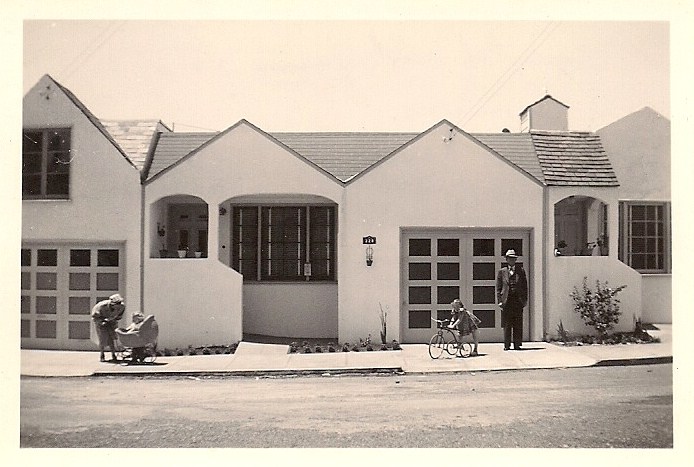
Showing posts with label Minneapolis Minnesota. Show all posts

"I will not have a single person slighted or left away"

"This hour I tell things in confidence,
I might not tell everybody, but I will tell you."

Friends of mine, friends of this blog, now it can be told: I am one quarter Swedish. I will pause for you to regain your composure after this revelation.

If you know me personally, you know that my highbrow film director of choice is Peter Greenaway, not Ingmar Bergman; my classical musical tastes running to Purcell or Gilbert & Sullivan, rather than... whoever the Swedish composers are. Even with the Muppets, I always preferred Sam the Eagle to the Swedish Chef. I have just never really cared about Sweden. I don't even like Swedish fish.

More Robert Bork than "Bork bork bork!"

My other half, at least, has an interest in some things Swedish, if you count ABBA, and Ikea's meatballs. Can we assume this suecophile tendency accounts for at least 25% of his affection for me?

If you know me through this blog alone, you will know that the ancestry I have written about is primarily British (either English or Scotch-Irish), with occasional forays into France and Denmark, but never Sweden. Until now.

This Scandinavian heritage comes to me by way of my paternal grandmother, Hazel Lucille Erickson (6 Sep 1910 - 6 May 2002); she is unique among my grandparents as she was the only first-generation American, born of immigrants. She loved all things Swedish, at least, and contributed elements of my costume, seen below, in a school pageant from second grade. (We sang a medley of "it's a small world" and "He's Got the Whole World in His Hands.") Inexplicably, I am holding a Danish flag, although I notice one of the girls in the front does have a Swedish flag... lilla slyna.


"A Salute to All Nations, But Mostly America."
Harper Elementary School, Fountain Valley, California.

Anyway. Grandma Hazel's parents were Erick Albert Erickson (28 Aug 1864 - 27 Nov 1948) and Johanna Maria "Marie" Svärd (Feb 1875 - 28 Apr 1914). Although both were born in southwest Sweden in the Västra Götaland area, they emigrated to America in 1888 and 1892, respectively. Erick, the oldest of nine children, came alone (his four youngest siblings following some years later); Marie seems to have arrived with or shortly after her sister, Ida Carolina Svärd (29 Apr 1872 - 4 Nov 1952).

At any rate, by 1900, they were both living and working in Minneapolis, Minnesota. Erick was working as a railroad foreman, while Marie was a waitress in her sister's cafe; perhaps that is where they met? They married on 17 January 1903, in Minneapolis.


Wedding Portrait.

The Erickson's first child, William Arvid Erickson (21 Jun 1905 - 18 Apr 1954), was born in 1905 in Hibbing Minnesota (where just a few years later the Greyhound Bus company would be founded), followed in 1910 by my grandmother. Interestingly, Hibbing is also the home town of Bob Dylan, who in nearly every way imaginable is the exact opposite of my grandmother Hazel, who, despite many nice attributes, was famously uptight and perpetually fussy, which seems to neatly put to rest the idea that environment has much to do with personality, but I digress....

The Ericksons remained in St Louis county, now home also to Erick's youngest three brothers, who worked the mines in the Iron Range. Then in 1914, Marie died, age thirty-nine, leaving her husband alone with two young children.

Lakewood Cemetery, Minneapolis Minnesota.
Photo courtesy of  Reed and Mary Lou Erickson

Erick, William, and Hazel returned to Minneapolis, where Erick continued working as a railroad foreman. Sometime after 1920, my grandmother went to live with her aunt and uncle, Ida Carolina (Svärd) and Gustaf Ferdinand Erickson (5 Jun 1865 - 24 Jun 1943, and no apparent relation to her father), and their three children. My grandmother's cousin Grace B Erickson (22 Aug 1898 - 12 Apr 1993) was like an older sister to Hazel, and they remained close until her death.

From left: Hazel Lucille Erickson, Erick Albert Erickson,
 Grace B Erickson, Ida Carolina Svärd. Probably the late 'teens.

By 1930, my grandmother was living with the other Ericksons in Minneapolis, but neither her father nor brother William are to be found, at least on the 1930 U S Federal Census. It all balances out, however, as Erick, Marie and William appear twice on the 1910 Census, unless there happen to be two families with the same names, birth dates and locations, and father's occupation; both families living in St Louis County. Of course, with so many Swedish Ericksons in Minnesota at the time, anything's possible....

Erick Albert Erickson continued to work on the railroad for a few more years, finally retiring and living with his son William until his death in 1948. My grandmother met my grandfather, married, and had three boys.... But that story is for another time.


Left: my grandparents, Hazel Lucille Erickson and Leroy "Roy" Stanley Burnett.
At her feet is her cousin Russell Fillmore Erickson (11 Jun 1910- 3 Sep 1988).
Right: Hams indeed! Grandpa Roy, cousin Russell, and Grandma's brother William Arvid Erickson.

As I said, I've not had much interest in Sweden, and by extension that part of my family tree. Growing up, on summer vacations or other trips, my paternal grandparents, she prissy and humorless, he stern and humorless, were not much fun. So dour, so Swedish (at least in her case; he was a dour Yankee).

Seeing the photos above, however, I wish I had known them better.

1  Erick Albert Erickson (28 Aug 1864 - 27 Nov 1948), son of Erik Andersson (24 Oct 1830 -1917) and Anna Charlotte Clauson (5 Oct 1841 -1920), married Johanna Maria "Marie" Svärd (5 Feb 1875 - 28 Apr 1914), daughter of Johannes Svärd (3 Jun 1837 - 27 Oct 1917) and Katarina Larsdotter (8 Jun 1830 - 30 Jan 1896), on 17 Jan 1903, in Minneapolis Minnesota.

2  Hazel Lucille Erickson (6 Sep 1910 - 6 May 2002) married Leroy Stanley "Roy" Burnett (31 Aug 1910 - 11 May 1980), son of Alfred Nathaniel Burnett (19 Aug 1883 - 31 Jul 1959) and Jennie Arleta Eaton (14 Mar 1891 - 15 Apr 1979) in Minneapolis, Minnesota, on 21 June 1933.

3  [Living] Burnett married Beverly Alane Brown (8 Aug 1934 - 7 Mar 2010), daughter of Dana Earl Brown (26 Jan 1910 - 10 Sep 1984) and Myrna Margaret Severin (5 Nov 1907 - 12 Jun 1997), in Long Beach, California, on 4 March 1961.

4  Your humble blogger.

"There was never any more inception than there is now"

I love autumn, in part because of all the leaves changing colors in the trees.


I have always had an affinity for trees, if not quite at the Joyce Kilmer level. (And I cannot tell you how glad I am that I checked the precise definition of "arborphilia" before using it in conjunction with myself....) Once, when much younger, I cried when one of our trees was cut down.

Recently, one of the large trees in front of our home had to be removed (it was, in fact, nearly dead). Although I didn't cry, it did sadden me somewhat. Part of what I love about our village is that it is surrounded by woods, and that there are so many magnificent old trees in our neighborhood. The village is going to replace the tree (we have been a "Tree City" for many years running), but of course, that will mean some mere sapling.


Autumn, of course, does lead one to think about the "autumn of one's life" and all that implies as well. Regrettably, I may not live to see that sapling become a mature tree. And the same way that some trees reach the end of their natural life, the same is true for family trees. My family tree, in toto, is specific to only my sister and myself; neither of us have children. Certainly, cousins share one side or other, but the unique tree that is mine will not go any further than this generation.

Which leads me to consider family tree charts, and the mixed metaphors therein. The most common pedigree charts show someone as the trunk of the tree, with their parents and grandparents as limbs. More correctly though, it you are the trunk, shouldn't your forebears be the roots, a term we commonly use? And then your own children could be the limbs, putting yourself at the middle of the tree, rather like an hourglass chart. Not as picturesque, but more accurate.

Anyway, apparently I am a stump. A stump by choice, but a stump nonetheless. Which makes for a slight melancholy when I stop to think that my genealogy research--although a delightful pastime for me--will ultimately not be of much interest to anyone. (We will forgo any contemplation as to who--if anyone--it interests right now....)

Looking at the larger picture, what will be--if not my legacy, whatever that is-- the fate of the things I leave behind? Where will they go? Where will they end up? Thinking about people about whom I have posted here before, I cannot help but wonder: what became of Thomas Lombard's books or Adaline Ketchum's sewing machine? Frank Bursley Taylor and his wife Minnetta Amelia Ketchum lived long, prosperous lives but had no children; do any of their belongings still exist, and if so, where?

Which, in a more than usually roundabout way, leads me to this post's subject, a maternal great-grandfather, Clarence Edgar Brown.


Caption by his son, Dana Earl Brown.

Clarence was born 1 Dec 1878 in Missouri, the sixth of eleven children, the third (and last) son. After living briefly in Colorado, where his father, Silas W Brown (abt 1835 - 20 Nov 1883) attempted prospecting (!), the family returned to the Kansas City area.

By 1903 Clarence found his way to Minnesota, where, at age twenty-four, he married Cora Mabel Kinman. Their first son, Rex Hugh Brown, was born in Minneapolis 1 Jun 1905 but lived less than a year. (Both of my maternal grandparents lost a brother; I have sometimes wondered what they might have thought about this coincidence.) Shortly thereafter, the Browns moved to Fargo, North Dakota, where two other sons followed, Dana Earl Brown (my grandfather) in 1910, and Ray Edgar Brown in 1914.

As an adult, in true Brown fashion, Clarence possessed some inexplicable wanderlust, moving every few years and changing careers nearly as often. He worked variously as an insurance collector (and later, manager); salesman for retail giant Butler Brothers in Minnesota; and as an "advertising man" for a printing company.

Butler Brothers, a few years before Clarence's employment in the 'teens.
 The building is still there, and is on the National Register of Historic Places.

From Pater, introducing his filium. About 1930.

I know of at least seven addresses for the Browns from 1905 to 1935, almost all in the Minneapolis area, sometimes living with the Kinmans, Clarence's in-laws.

In 1916, the Browns are living with in-laws, so we know where they are.
 But where is Clarence? The postmark reads Salem, but: Salem where?
(And I have to note: I love his handwriting.)

Most of the houses and apartments in which the Browns lived are still there, which speaks well to Minneapolis' preservation efforts. Here is another Kinman-Brown home, from about 1920 and today.


Originally built in 1909, it is mostly unchanged.

After about 1934, things get fuzzier. The last employment I am aware of for Clarence is the advertising job in 1930; the last address from 1934. It is also hard to get a grasp on his nature; in the few photographs I have, he is always looking rather stiff and stern, although there is a hint of smile, perhaps, in this formal portrait.


Probably about 1930.

When going through my mother's things after she died, I found all that remained of my grandparents' belongings. My family tends not to be nostalgic, or keep souvenirs; where I get that trait has yet to be determined.... There was very little from my grandfather's early years, and even less about his father: a few photographs in an album; the portrait, postcard, and business card shown above; and this satchel.


I am curious as to why it was kept, but oddly pleased to have it. There were also two letters from Clarence, one from 18 May, the other 30 June 1937, written to his wife, Cora. They were sent from Jonesboro, Louisiana. Here is the latter in its entirety:

Dear Cora,

Just read Ruth's letter [I am unsure who this is] as she states you are back from hospital, will write you at the home address. [Cora was recovering from an accident in which she broke her hip and wrist.] By the way, she addresses the letter to Clarence and they know me at the Post Office as C.E., so will be more sure of getting it if addressed "C.E.", as I think there is a nigger gets mail by the name of "Clarence."

Surely glad to hear that the bed sore has responded to treatment, but indeed sorry to hear that they had to do the setting of the wrist over again. However it is no doubt better to have it done right, as in the other way it may have been so it was crooked and also might have lamed you for life. I surely hope the hip is coming along all right and that you are getting along finally. Will certainly  be fine when I can hear from you direct, as there is much more satisfaction that way. However, I appreciate the kindness of Ruth in writing and letting me know while you cannot write.

It has been quite hot here  during the month and I imagine it will be hotter yet during July and August. Watermelon and canteloupes are now coming in down here. Have not had any yet, but hope to get a slice or two of watermelon soon. Can get a pretty good size one for 20¢. Hot weather has pretty well put business on the stand still around here, as they like to get in the shade. Have been doing a little from time to time, but have not been able to get two or three days work following one another. However, I managed to pinch off a little money for you and am sending same, enclosed $5.00 and hope you get the letter okay, without delay. Hope to be able to send more, soon. Well, there is no news, so will close, hoping that you are rapidly recovering and will be in fine shape soon.

As always, with much love, Clarence

P.S. Mail to this town, as usual and if I leave (which I will do soon) I will leave forward address.

Apart from making me wonder what Clarence's latest employment might have been, I could not imagine why this particular letter, admitting itself that there was no real news in it, had been kept. It was not until I learned that Clarence died just two months later, on 21 August 1937, that I realized: it must have been the last letter they ever received from him. He was fifty-eight.

Just two brief letters and a postcard, a satchel, and a few pictures. Dried leaves, once brightly colored, from a life.
 
Clarence in Florida in 1926. Still dour and suited, but perched on a palm tree.
Unlike the autumn foliage that began this post,  palm trees--like memories-- are evergreen.


1. Clarence Edgar Brown (1 Dec 1878 - 21 Aug 1937), married Cora Mabel Kinman (4 Sep 1876 - 22 Aug 1958), daughter of William Edwin Kinman and Sarah Jane Conley, on 16 Sep 1903, in Morgan, Minnesota.

2. Dana Earl Brown (26 Jan 1910 - 10 Sep 1984) married Myrna Margaret Severin (6 Nov 1907 - 12 Jun 1997), daughter of John Jacob "Jack" Severin and Isabelle "Belle" Runser, on 21 Oct 1933, in Minneapolis, Minnesota.

3. Beverly Alane Brown (8 Aug 1934 - 7 Mar 2010) married [Living] Burnett, son of Leroy Stanley Burnett and Hazel Lucille Erickson, on 4 Mar 1961, in Long Beach, California.

4. Your humble blogger.
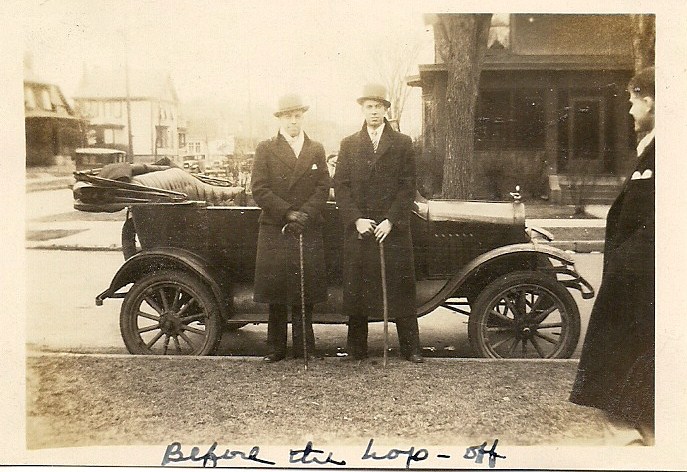


"...more the silent one..."

In honor of Halloween, allow me to introduce you to The Spook, also known by the less macabre name of Sarah Jane Conley, one of my maternal second great grandmothers.


The Spook holding a pumpkin, appropriately enough.

Sarah Jane Conley was born in November 1857, in Richland County, Illinois, sixth child (of seven) of David Conley (abt 1822 -aft 1880) and Rebecca Tolliver (abt 1823 - 1869). It is through Sarah Jane that I am a Double Tolliver, as her parents were second cousins. Sarah Jane's great-grandparents on her father's side were William Maxwell and Lucy Tolliver, while her great-grandparents on her mother's side were Jesse Tolliver and Martha Stamper, Lucy and Jesse being brother and sister.

The Conleys were farmers, and moved to the recently formed Redwood County, Minnesota, sometime in the early 1870s. In 1875, on 13 Nov 1875, the just-of-age Sarah Jane married William Edwin Kinman. The Kinmans, like the Conleys, had been living in Illinois in 1870, and moved to Minnesota about the same time as the Conleys. I do not know if they families knew each other in Illinois; the Conleys and Tollivers (and associated families) tended to be clannish, and I can find no records of other Kinmans in their milieu.

At any rate, the newlyweds seem to get along fine; their first child (of six), Cora Mabel Kinman was born just ten months later. Growing up with siblings named Susan, Rebecca, Catharine, George, John, and Anna (all common names of the era, and much-used in the Tolliver clan) it comes as a bit of a surprise to find Sarah Jane giving her own children such comparatively exotic names as Alta, Iza May, and Lola.


From left: William Edwin Kinman and Sarah Jane (Conley) Kinman; their grandson,
 Dana Earl Brown; daughters Lola Dorothy (Kinman) Gilmore, Cora Mabel (Kinman) Brown,
 Alta Edith (Kinman) Anderson; and son-in-law Walter Campbell Gilmore.
 In front; grandson Ray Edgar Brown?  About 1925.

The Kinmans remained in Redwood County until just after 1900 (William Edwin Kinman is listed as the postmaster of Morgan on the 1900  U S Federal Census), although by the early 1890s William had given up farming and taken up insurance sales. In late 1904 the family moved to Minneapolis, a consequence, no doubt, of William's success; by this time he was the State Manager of the Modern Brotherhood of America, a fraternal organization founded in 1897.

By 1920, the Kinmans had moved twice more; William Edwin Kinman was now State Director for the MBA, and along with his two unmarried daughters, Iza and Lola (both teachers), had his oldest daughter, Cora, and her family (husband Clarence Edgar Brown, and sons Dana Earl Brown and Ray Edgar Brown) living with them.

3512 Third Ave S. The house was built in 1909, and is still standing.
 Apart from a paint job, it looks nearly the same.

But what, you ask, of The Spook? After her husband's death in 1925, Sarah Jane again lived with her oldest daughter and her family, this time in their home in Moorhead, Minnesota. Apparently as time went on she became more and more reclusive and odd. (She was, by this point, in her seventies, so today we might assume she was suffering from senile dementia.)

By the time my maternal grandmother, Myrna Margaret Severin married my grandfather, Dana Earl Brown, in 1933, Sarah Jane had taken to wandering the house, silently (in part because she always wore slippers). She was known to suddenly appear, staring silently, which would usually frighten whomever she encountered. Hence the sobriquet "The Spook."


From left: The Spook, AKA Sarah Jane (Conley) Kinman, daughter Cora Mabel (Kinman) Brown,
 and granddaughter-in-law Myrna Margaret (Severin) Brown. About 1933.

In true Spook fashion, she died on Friday the 13th, March 1936.


5. Sarah Jane Conley (Nov 1857 - 13 Mar 1936) married William Edwin Kinman (Mar 1858 - 13 Jun 1925), son of William Kinman and Sarah R Moore, on 13 Nov 1875, in Redwood Falls, Minnesota.

4. Cora Mabel Kinman (4 Sep 1876 - 22 Aug 1958) married Clarence Edgar Brown (1 Dec 1878 - 21 Aug 1937), son of Silas W Brown and Malinda J Carter, on 16 Sep 1903, in Morgan, Minnesota.

3. Dana Earl Brown (26 Jan 1910 - 10 Sep 1984) married Myrna Margaret Severin (6 Nov 1907 - 12 Jun 1997), daughter of John Jacob "Jack" Severin and Isabelle "Belle" Runser, on 21 Oct 1933, in Minneapolis, Minnesota.

2. Beverly Alane Brown (8 Aug 1934 - 7 Mar 2010) married [Living] Burnett, son of Leroy Stanley Burnett and Hazel Lucille Erickson, on 4 Mar 1961, in Long Beach, California.

1. Your humble blogger.

"the effect upon me of my early life"

Last time, I wrote about people to whom I am distantly connected, and ended by mentioning Calvin Coolidge, with whom I seem to have nothing in common, except perhaps a love of dogs. Anyway....

Someone to whom I am closely related--and happily have a great deal in common with--is my maternal grandfather, Dana Earl Brown (26 Jan 1910 - 10 Sep 1984).


Dana Earl Brown c 1928

Googling his name reveals just one fact: he was an occasional lyricist, with three songs registered for copyright with the Library of Congress, all from 1939: Free, White, and 21, (music by Don Rodricks); I'll Never Let You Go (also with Rodricks, who has two other copyrights in 1934); and No  Shadows, (music by Harold Harvey). Aside from the potentially creepy nature of their titles, I have not been able to learn anything else about these songs, or Grandpa's collaborators. (Although there are at least three other Harold Harveys: one an early twentieth century lesser English painter; another a Hershey, Pennsylvania oncologist; and the last a sex offender and death row inmate in Florida. Harold Harvey was the occasional pseudonym of trumpeter Harry James, but I think they must have been different people.) Don Rodricks did provide the words for the song Treasure Island, (music by George Rex, 1938).

I have not been able to locate copies of these songs, but at least one was a (very) minor success; I have a royalty check for $1.58 from Davis and Schwegler. They are a mostly forgotten  music company, notable only for releasing early recordings of the Nat King Cole Trio. In the All Music Guide Review they are referred to as "a sleazy little fly-by-night outfit that soon went bankrupt."


The Internet not offering much, I am happy that there is a great amount of Grandpa Dana's life documented in photos, clippings, and letters that he saved, which I have been looking through with tremendous enjoyment.

He was born 26 January 1910 in Grand Forks, North Dakota, to Clarence Edgar Brown (1 Dec 1878 - 21 Aug 1937) and Coral Mabel Kinman (4 Sep 1876 - 22 Aug 1958). He was their second child, the first, Rex Hugh Brown (born 1 Jun 1905), dying at less than a year old. At the time of Dana's birth, his father was an Insurance Manager, a job he probably got from his father-in-law, William Edwin Kinman (Mar 1858 - 13 Jun 1925), who had a long career in that field. Clarence Brown changed jobs often, at other times being a clerk, salesman in a department store, and an advertising man for a printing company. This peripatetic approach to employment was something he would pass along to his son.

The Browns moved, first to Moorhead Minnesota, where another boy was added to the family: Ray Edgar Brown (2 Jul 1914 - 10 May 1980), then on to Minneapolis after 1915, where they finally stayed. Grandpa Dana attended Bryant Junior High, where he was Class President and served as Sports Editor of the Bryant Times, then Central High School, where he was active in tennis, basketball (breaking his collar bone in the process), and glee club, graduating in 1927. Around that time as well, he formed a musical duo with his best friend, Cliff Nash, performing at local amateur nights as "the Kinky Kids." One hopes the name was due to their curly hair, and not the material....


Sometime in the late 'twenties, the Browns moved back to Moorhead, Minnesota, and Grandpa Dana began attending Wheaton College (in Illinois), where he lettered in football and tennis, and again wrote for the school paper, offering up everything from hard reporting to groan-inducing jokes as filler. He also came in second place in the school talent show, with a poem called "Beauty." He did not graduate, returning to Moorhead by 1930, where he began courses with the Minnesota College of Law night school, to mixed results. Like his father, it seems he did not know what he wanted, or could not stick to one thing for very long, although the seeds of many of his life-long interests were already apparent: sports, writing, music, civic involvement, and bad jokes.

In January 1930, Grandpa received the following reply, from New Scotland Yard, London S.W. 1:


"Madam,
With reference to your letter of the 13th December, I am directed by the Commissioner of Police of the Metropolis to inform you that he regrets that he is unable to offer you an appointment in the Force, nor is he in a position to advise you as to any other employment in this country for which you may be suitable.
I am, Madam,
Your obedient Servant,
[signed] H G Gilbert"


Clearly the chaps at Scotland Yard  couldn't have been that good as detectives if they mistook Grandpa Dana for a woman. Although he must have attempted to clarify things, as there is another rejection dated just three weeks later, pointedly addressing him as "Sir." Although in that response they have his name as E. Dana Brown.

In May 1931, he received the following reply, from O. O. McIntyre, nationally known for his "New York Night and Day" daily syndicated column (reaching fifteen million readers as his peak), and a former publicist of Florenz Ziegfeld:


"Sorry, I already have a most satisfactory chauffeur. But, here's hoping you make a good columnist."

The brevity is not surprising, as McIntyre reportedly received three thousand letters a week from his fans (and--apparently--aspiring potential employees). McIntyre handled his correspondence and other writing from his bed, beginning after breakfast and continuing until early evening, always with the curtains drawn. He claimed he disliked sunshine.

Anyway. 1931 was a busy, if restless, year for Grandpa.  He was the Managing Editor and contributor to the newly-formed Fargo [North Dakota] News, a weekly newspaper serving the Fargo-Moorhead area. He was a Committeeman for Troop 39 of the Boy Scouts of America. He regularly submitted poems and song lyrics to places as diverse as Christian Business magazine and DeSylva, Brown & Henderson, the successful song publishers. With titles like "Longing," "Song of Melancholy," "Consolation," (from a woman's point of view and submitted as Diane E. Brown!), and "Lady Bugs & Dreams," it is perhaps not surprising that he received numerous rejections. Is it too much to think that the titles suggest his own unhappiness?

Also in 1931, he took a lengthy road trip to Hollywood, California, with another friend, Fred Cook, where they lived for two months before returning home. Although Grandpa kept an entertaining journal of their trip (including roadside tennis games while waiting for help with the inevitable breakdowns; numerous detours; and picking up an apparently never-quite-sober minister in Texas, who rode with them as far as Taos, New Mexico, before vanishing in the night...), he never explains his motives for going west, or what prompted his return.


At any rate, by late 1931, he had a job with the Strutwear Knitting Company, in accounting. Hardly the place for a man with big dreams. But there was more going on... and I will let Grandpa tell it in his own words, in a poem he wrote for my grandmother on their twenty-fifth anniversary:

The place was Minneapolis,
The time was '33.
A minister named Porter
Stood there with you and me.

And, as I slipped that flimsy ring
Upon your shaking hand,
There was no "Great Depression"
For we were feeling grand.

I didn't miss a day of work,
We needed every buck,
Just meeting you in '32
Was my best stroke of luck!

We didn't have much money,
So, we spent more time in bed
Than might have been the custom
If we'd been rich, instead.

So, it really wasn't surprising
That late in '34
We had our little Beverly
To fondle and adore.

And then, in 1935
We took our biggest journey
I chugged to San Leandro
With Beverly, and "Myrnie."


"Myrnie" was Myrna Margaret Severin (6 Nov 1907 - 12 Jun 1997), youngest of three daughters of John Jacob "Jack" Severin (11 Jul 1878 - 2 Jan 1965) and Isabelle "Belle" Runser (21 Oct 1881 - 30 Mar 1960). Grandma Myrna was born in Redfield, South Dakota, and by 1932 was living and teaching (having received a degree from Moorhead State Teachers College) in Fargo. I would love to know how my grandparents met; perhaps one clue is that Grandma's high school diploma recognizes her four years of literary study. Did they meet at a poetry reading? Had she seen something of his in the Fargo News?  It was a brisk courtship, as they were married the next year, on October 21 1933, in the home of Grandpa's aunt and uncle, by the aforementioned Rev Porter, a retired Presbyterian minister.

In 1934, my mother was born, and the following year led to another change in the Brown household. According to Elizabeth Faue, in the "Minneapolis Labor Review:"


In the summer of 1935, Farmer- Labor Party member Oscar Hawkins marveled at the happenings in Minneapolis. Everywhere, discontented workers brought the labor movement to life. Even the Strutwear Company, the public enemy of labor unions, was faced with a strike. As Hawkins reported, “the Strutwear Knitting Works had a sudden and lively strike ten days ago — still on. It is so hard to get the straight of the various conditions. The employers tell the newspapers their story... Stories of the workers are different.”


Although I have no record of my grandfather's participation--or not--in the strike, I do know his reaction: the Browns packed up and moved to northern California. The lived first in San Leandro, then San Francisco, where their second child, my uncle Bruce, was born, then Daly City, and finally, Oakland.


628 Hillside Blvd, Daly City, California
My great-grandparents, Belle & Jack Severin, with my mother and uncle.


Grandpa Dana's jobs were just as numerous:

I worked in hosiery awhile,
Then sold it on the road....

The old man sold potato chips,
This followed frozen food.
And then worked on the waterfront,
In a six month's interlude.

A purser with United
I was in '43.
we flew the South Pacific
Till it saw enough of me.

Then, into business for ourselves
With Kenny and with Lee,
In looking back it seems quite odd
We chose a grocery.


The grocery, G & M Grocery, on Foothill Blvd in Oakland, was a joint venture with Walter Rensch, and two relatives: John J Severin, and Kenneth E Richards, Grandpa's father-in-law and brother-in-law, respectively. I have not been able to discover what connection Rensch had to our family, except that he was a neighbor of my grandparents. There was also a pharmacy, Kay Dee Drug Stores, in Alameda owned by the foursome. In 1948, the grocery was sold entirely to Rensch, and Grandpa Dana and Kenny became the co-partners in Kay Dee.

Of course, it wasn't all work in the '40s. Grandpa was also a volunteer Civil Defense Warden, an award-winning member ("Trophies too, by gosh. That guy Dana!") of the East Oakland Racing Pigeon Club (he also raised pheasants and mandarin ducks), President of the East Bay Merchants Association and member of the Elmhurst Lions Club, and an amateur actor with the Oakland Community Players, appearing in such productions as Date with Judy, Goodbye Again, and as "the male lead in the psychological comedy-drama Guest in the House."


Note the autograph of Shirley Temple Agar [her then-husband] on the OCP card.


From a review by Harold Peterson, under the headline "Dana Brown Steals Show":

As a rule we do not like theatre drunks. They either overdraw their roles into messy caricature or underplay badly. However, Harvey Wilson, as acted by Dana Brown proved the exception. Mr. Brown pulled out all stops without overdoing the role and practically walked away with the second act.

DEB, standing on right,  and his supporting cast.


Yet despite all this activity, he is still thinking bigger: there is a reply from the Royal Siamese Embassy from 1948, referring his request to conduct some kind of business endeavor in Siam to another office. Whether through "partner complications," disappointment with his Siamese scheme, or just having been bitten by the acting bug and hoping to make it in Hollywood (as actor? songwriter? something!), the Browns uprooted--for the last time--and headed south, to Long Beach, California.

To be continued....